
Brand Logo LED video walls for command, broadcast, venues, and enterprise spaces
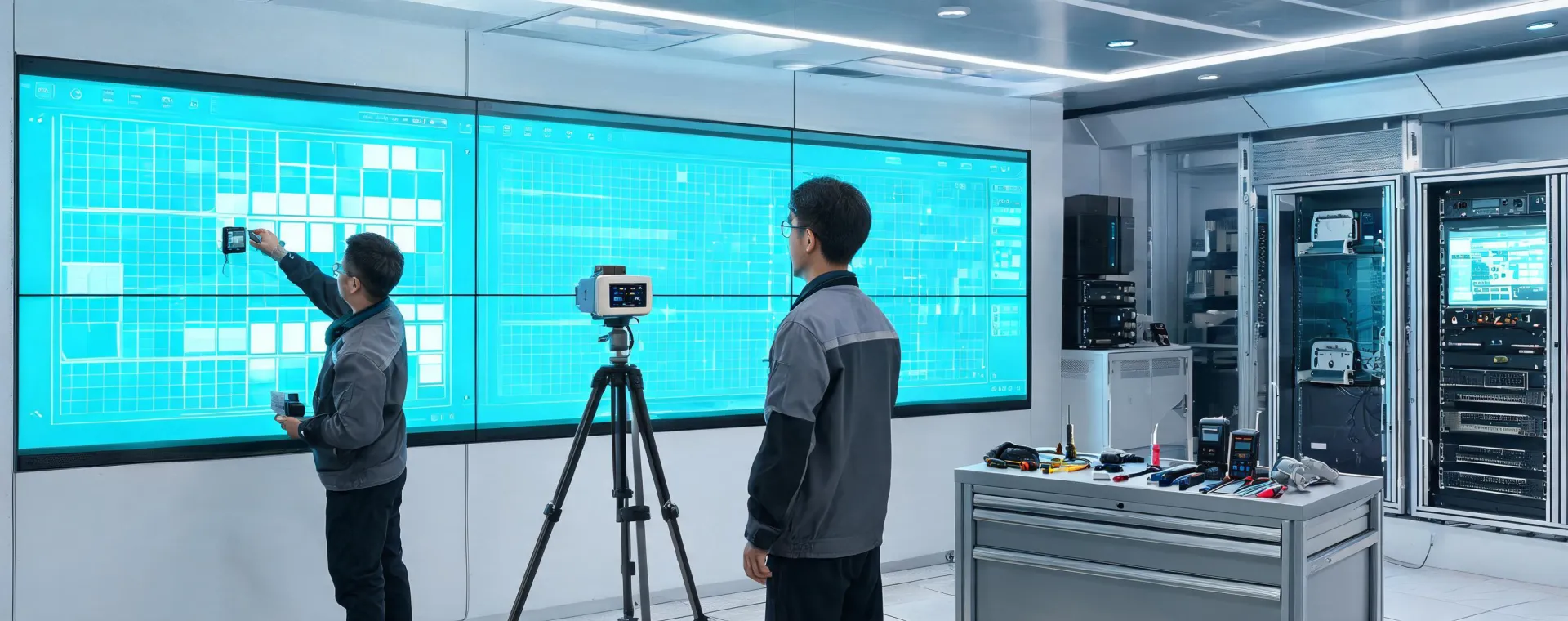
Engineers calibrating a Barco LED video wall
Services

Barco LED wall services for technical certainty

Barco service planning is written for teams that need evidence: AV consultants, command center operators, broadcast engineers, facility owners, and procurement groups who must defend a display decision long after the ribbon cutting.

What we deliver

Two-column technical service matrix

Every LED wall project has visible requirements and quiet dependencies. The service matrix separates what the audience sees from what the operator must manage, so assumptions can be documented before purchase orders and installation schedules are fixed.

Service domainBarco planning output
Room and viewing analysisViewer distance model, target pixel pitch range, sightline notes, ambient light risk, operator ergonomics, and recommended content safe zones.
System architectureCabinet count, mounting concept, controller path, signal redundancy, EDID behavior, spare-module plan, and integration interface notes for the AV contractor.
Installation readinessPower and data checklists, thermal assumptions, structural tolerances, service access plan, packing sequence, and acceptance test schedule.
Color and performance governanceCalibration baseline, brightness policy, refresh considerations, camera tests when needed, and records for future cabinet replacement.
Lifecycle supportPreventive inspection cadence, firmware control, support escalation routes, spare inventory advice, and handover documents for facilities or operations teams.
How we work

Numbered steps with documentation at each gate

01

Define the operating burden

The first service discussion identifies whether the wall supports executive presentations, emergency response, live broadcast, retail programming, or public events. That context changes everything from brightness policy to redundancy expectations. A command center may require strict uniformity and secure source routing, while a lobby wall may prioritize architectural finish and content scheduling. Barco-style service starts by naming the operating burden plainly.

02

Translate the room into a system drawing

Viewing distance, wall envelope, heat, power, cable routes, mounting constraints, signal sources, and service access are converted into a buildable scope. This step prevents a beautiful rendering from becoming an impossible installation. It also gives procurement teams a more precise basis for comparing alternatives because the discussion moves beyond square meters and into real operational requirements.

03

Validate performance before handover

Commissioning should not be treated as a quick visual check. The team reviews color, seams, brightness, controller behavior, source switching, spare modules, thermal observations, and user workflows. For studios, validation can include camera checks and content tests. For 24/7 rooms, the handover package should include records that future technicians can use when replacing modules or investigating drift.

Request a technical service review for your LED wall program.

Send the room type, approximate wall size, viewing distance, sources, and deadline. A Barco display specialist can help turn early assumptions into a specification that installers and operators can actually use.